
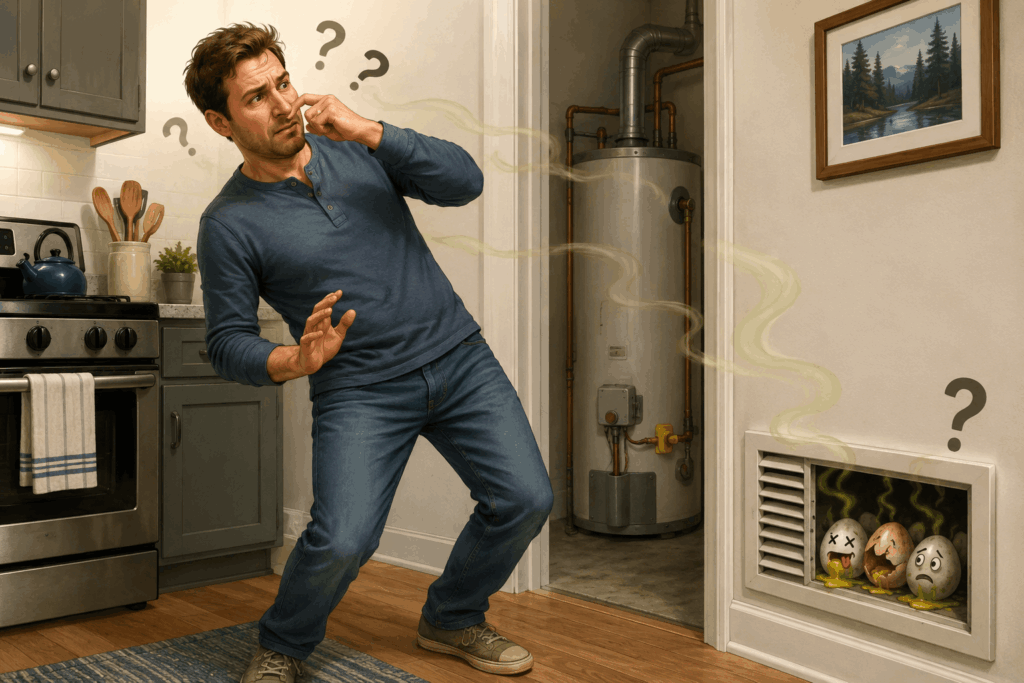
You catch a faint whiff of something like rotten eggs near the stove or the water heater. Your stomach drops a little, because you know what that smell can mean…
So you grab your phone, and most people’s first instinct is to call the gas utility. That’s half right, and the other half is worth understanding before you ever need it.
The utility company plays an important role, but for finding and actually fixing a gas leak in your home’s lines, the people you want are licensed plumbers. Here’s how the whole thing actually works, and why summer is a surprisingly common time for gas line trouble to show up.
First things first: your safety
Before anything else, if you smell gas strongly, hear a hissing sound near a gas line, or feel lightheaded, get everyone out of the house and call the utility’s emergency line from outside. Don’t flip light switches, light anything, or use anything that could spark. This part isn’t about plumbing versus utility, it’s simply about getting to safety first.
The gas utility will come out, and they’ll shut off your gas at the meter to make the situation safe. That’s the crucial role they play, and it’s the right call in an emergency.
Here’s where most people get confused
What the utility company generally does not do is find the leak inside your home’s gas lines and repair it. Their responsibility typically ends at the meter. Once the gas is shut off and the immediate danger is handled, locating that leak somewhere in your home’s piping and fixing it properly is the job of a licensed plumber.
This is the part that catches homeowners off guard. They assume the utility handles the whole thing, then learn that their gas stays off until a qualified plumber has found the leak, made the repair, and the system passes inspection. Knowing this ahead of time saves you scrambling to find help while your hot water and stove sit dead.
Why a plumber is the right call
Finding a gas leak is genuinely skilled work. Our team uses specialized detection equipment to pinpoint exactly where gas is escaping, whether it’s a corroded section of pipe, a loose fitting, or a failing connector at an appliance. We then perform a pressure test to confirm the severity and verify there are no other leaks hiding in the system.
From there, the repair depends on what we find. Sometimes it’s replacing a damaged section of line, sometimes it’s re-securing a fitting, sometimes it’s addressing an aging pipe that’s reached the end of its life. The same precise leak detection and repair approach we bring to water lines applies to gas work, and every repair gets pressure tested and verified before we call the job done.
Why summer brings out gas line problems
You might not think of summer as gas leak season, but a few things make it a common time for issues to surface.
Summer is when a lot of homeowners fire up gas appliances that sat unused through spring, like outdoor grills plumbed into a gas line, pool heaters, and patio equipment. Connections that loosened or corroded over the off-season reveal themselves the first time the gas flows again. Summer is also prime season for digging, landscaping, and home projects, and an accidentally struck underground gas line is a real risk anytime a shovel or auger goes into the yard. And the ground movement that comes with our hot, dry stretches can stress buried lines over time.
The warning signs worth knowing
Beyond the classic rotten-egg smell, a few other signs can point to a gas leak. A hissing or whistling sound near a gas line or appliance. A spike in your gas bill that your usage doesn’t explain. Dead or discolored patches of grass or plants over the path of a buried gas line, since escaping gas disrupts the soil. And physical symptoms like headaches, dizziness, or nausea that ease when you leave the house.
If you notice any of these, get to safety, call the utility to shut things off, and then call a licensed plumber to find and fix the source. Our plumbing team handles exactly this throughout the greater Milwaukee area.
Know who to call before you need them
A gas leak is stressful enough without the added confusion of not knowing who actually handles the repair. Now you know: the utility makes it safe at the meter, and a licensed plumber finds and fixes the leak in your home’s lines.
If you’re dealing with a gas line concern, or you’d just like an aging system inspected before grilling and pool season really gets going, call us at 262-220-7020 or schedule online. We’ll keep your home safe and your gas flowing where it’s supposed to.
 THIS ELECTRICAL ISSUE COULD RUIN YOUR HOT TUB PARTY
