
Capital Installs and Replaces Boilers — Fast, Reliable, and Built to Last
When it’s time for a new boiler, trust Capital Heating, Cooling & Electric. Our certified team installs and replaces all boiler types — natural gas, propane, and oil — with the precision and care your home deserves. A properly installed boiler isn’t just about heat, it’s about comfort, efficiency, and peace of mind for decades to come.
For boiler installation or replacement service in Milwaukee, call Capital at 262-220-7020.

Benefits of Boilers for Milwaukee Homes
Boilers aren’t efficient just anywhere — they’re especially well-suited to Milwaukee’s housing styles and long winters. Compared to furnaces and electric heaters, boilers bring unique advantages that fit our local needs:
Stronger Performance in Harsh Winters – Milwaukee winters often mean weeks below freezing and sudden lake-effect cold snaps. Boilers circulate steady, radiant heat that keeps your home comfortable even during extended deep freezes.
Perfect for Older Housing Stock – Many Milwaukee neighborhoods — from Bay View to the East Side — have homes with radiators or baseboard systems already in place. Installing or replacing a boiler is often the easiest, most cost-effective solution.
Lower Operating Costs vs. Electric Heat – With high Wisconsin energy rates, electric furnaces can drive up bills quickly. Natural gas or oil boilers are typically far more cost-efficient in our region.
Even Heat in Drafty Homes – Older Milwaukee homes aren’t always perfectly insulated. Boilers distribute heat evenly, avoiding the hot-and-cold spots that forced air systems struggle with in drafty spaces.
Long-Lasting Equipment – In a climate where heating systems work overtime, durability matters. Boilers are known for 20+ year lifespans, giving Milwaukee homeowners decades of reliable performance.
Cleaner, Healthier Comfort – Boilers don’t rely on ductwork, which means no blowing around dust, allergens, or dry air — a welcome relief during Wisconsin’s dry winters.
For Milwaukee homeowners, boilers aren’t just another heating option — they’re often the best fit for the weather, the homes, and the energy costs unique to our area.
How Do Boilers Work?
Boilers work by heating water or producing steam, which is then circulated through pipes and radiators to provide heat to a building.
Here is a general overview of how boilers work:
1
Fuel is burned in a combustion chamber, which produces heat.
2
The heat is transferred to the water, which is contained in a vessel called the boiler.
3
The water is heated to a high temperature, which produces steam or hot water.
4
The steam or hot water is then circulated through pipes to radiators or other heat exchangers located throughout the building.
5
The heat is transferred from the steam or hot water to the air in the building, providing warmth and comfort.
6
The cooled water or condensate is then returned to the boiler to be reheated and the process repeats.
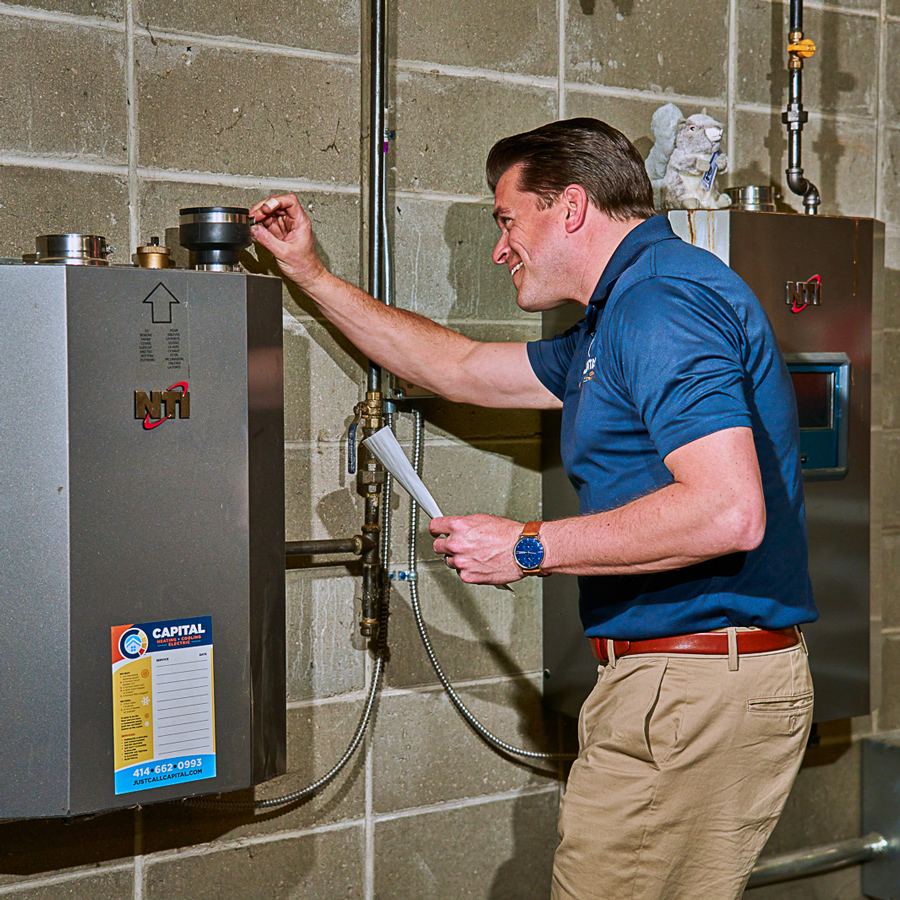
Boilers can be fueled by a variety of sources, such as natural gas, oil, or electricity. The type of fuel used typically depends on the availability and cost of fuel in your area, as well as the efficiency and environmental impact of the fuel source.
Overall, boilers are a reliable and efficient way to provide heat to a building and have been used for centuries to keep people comfortable and warm during the harsh winter months in Wisconsin.
Testimonials
What Our Customers Say
Capital’s Boiler Installation Process
Installing or replacing a boiler is a big investment. We make it simple with our proven process:
- Home Assessment – We’ll evaluate your home’s heating needs, piping, and existing system.
- Recommendation & Options – We’ll recommend the right size and type of boiler for your home, whether natural gas, oil, or propane.
- Expert Installation – Our technicians install your system to manufacturer standards for efficiency and safety.
- System Testing – We calibrate, test, and confirm your new boiler is operating perfectly before we leave.
- Beyondification Guarantee – With Capital, installation isn’t just technical. It’s our promise to go beyond expectations — delivering reliable comfort and peace of mind.
Is It Time to Replace Your Boiler?
Every boiler has a lifespan, and once it reaches a certain point, repairs may no longer be the smartest investment. Here are the most common signs Milwaukee homeowners should watch for:
System Age – Traditional cast-iron boilers can last up to 20 years with proper care, but most high-efficiency models are ready for replacement around 12–15 years. If your unit is in this range, it’s wise to plan ahead before you face a mid-winter breakdown.
Frequent Service Calls – When you’re calling for repairs year after year, those costs add up quickly. A new boiler is often more economical in the long run.
Climbing Energy Bills – An aging boiler has to work harder to keep your home warm, which drives up monthly heating costs. Modern systems are far more efficient.
Uneven Heat or Strange Noises – Cold spots, banging, or hissing sounds signal that the system is straining and may not last much longer.
Leaks, Corrosion, or Rust – Visible signs of wear often point to deeper problems that can’t be fixed with a simple repair.
Outdated Technology – Older units lack today’s efficiency features, zoning options, and safety controls that give you better comfort and peace of mind.
At Capital Heating, Cooling & Electric, we’ll carefully inspect your system and explain whether repair or replacement makes the most sense. You’ll always get upfront pricing, honest guidance, and professional installation that ensures your new boiler is ready to handle Milwaukee’s toughest winters.
What Boilers Do Best
Is A Boiler Best for You?
Whether a boiler or a traditional furnace is better for your home depends on several factors. Here are some key differences between boilers and furnaces:
Heat Distribution
Boilers distribute heat through hot water or steam, which is circulated through pipes and radiators. Furnaces, on the other hand, distribute heat through air, which is blown through ductwork and vents. Boilers can provide more even and consistent heat in your home, while furnaces can produce uneven heat distribution due to variations in air temperature from room to room.
Efficiency
Boilers can be more energy-efficient than furnaces, as they do not require blowers or ductwork to circulate heat. This can result in lower energy bills and less wasted energy. However, the efficiency of a boiler or furnace will depend on the specific model and fuel source used.
Lifespan
Boilers can have a longer lifespan than furnaces, as they have fewer moving parts and require less maintenance. However, both boilers and furnaces can last for many years with proper care.
Fuel Source
Boilers can use a variety of fuel sources, such as natural gas, oil, or electricity. Furnaces typically use natural gas or oil. The availability and cost of fuel in your area can influence which type of system is more cost-effective.
Cost
Boilers can be more expensive to install than furnaces, as they require more complex installation and more piping. Again, the cost of a boiler or furnace will depend on the specific model and fuel source used.
Call Capital today if you would like to find out what heating source would be best for YOUR home.

Why Choose Capital?
Capital Guarantees
Capital Heating, Cooling, Electric & Plumbing stands behind all our work. You are covered on the installation of your heating or cooling system by the following guarantees and more:
- Your 100% Unconditional Satisfaction Or Your Money-Back Guarantee
- 5-Year Comfort Guarantee
- Exclusive Lemon-Free Guarantee
- Lifetime Installation Components & Craftsmanship Guarantee
- Lifetime Ductwork Warranty
- And more.
Flexible Financing
Capital cares to make your life better today, without YOU having to worry about tomorrow. So we also offer a number of financing options to help you with your HVAC system, plumbing, or electrical repair or replacement costs.
Capital Communication

We will let you know what to expect on the day of your service, and introduce you to technician before they arrive at your doorstep. At least 24 hours prior to your installation, you’ll receive a “Meet Your Technician” email with:
- Technicians’ photo
- # years experience
- Photo of the install truck
- In Transit text
In addition to the friendly introduction, you can rest assured that every Capital technician who enters your home is thoroughly vetted, professionally trained, and nationally certified. In fact, many team members have been recruited from across the country to ensure you always receive the highest level of expertise—no matter the service.
