
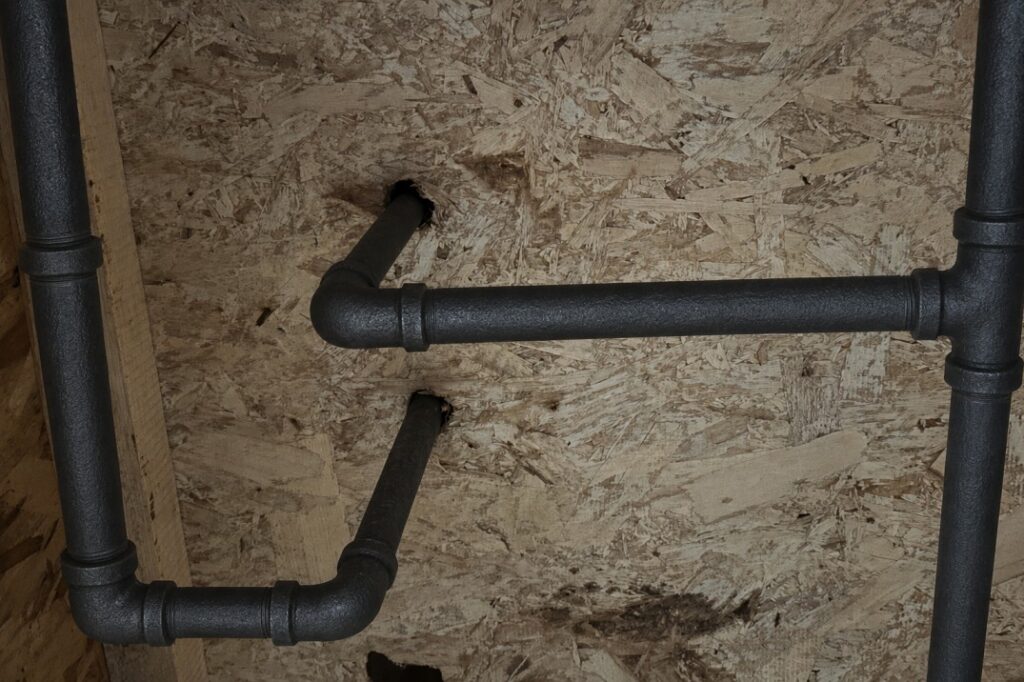
Here’s a stat that might make you walk down to your basement and take a look: Roughly half the homes in the greater Milwaukee area were built before 1980!
Now, plumbing systems are remarkably resilient, which is part of the problem. Plumbing in an older home keeps working long past the point where it should’ve been replaced, quietly degrading inside the walls and under the slab…until one day it doesn’t.
(Usually on a holiday weekend.)
The cast iron pipe situation
If your home was built before 1975 or so, there’s a good chance your drain pipes are cast iron, and cast iron has a lifespan of about 50 to 75 years depending on local water conditions. The math on that isn’t great if your house was built in the 1950s.
Cast iron corrodes from the inside out, narrowing the pipe’s interior bit by bit until water has trouble getting through. You’ll notice it as slow drains, gurgling sounds when other fixtures run, or sewer smells from drains that should be self-sealing. Eventually those pipes crack, and at that point you’re not dealing with a clog, you’re dealing with a leak somewhere inside the structure of your home. A camera inspection is the only way to really know what’s going on with older drain lines, and our team offers drain cleaning and inspection that includes a look at exactly what’s happening below the surface.
The sump pump that you’ll only think about when it’s too late
Wisconsin gets serious summer rain, and southeastern Wisconsin in particular has clay-heavy soil that doesn’t drain well. The result is a lot of water that ends up against foundations, and the sump pump in your basement is the only thing keeping it out.
Here’s the problem: the average sump pump lasts about 10 years, and most homeowners have absolutely no idea how old theirs is. They don’t think about it until the basement floods during a heavy June thunderstorm, by which point it’s far too late. A quick test you can do is, pour a bucket of water into your sump pit. The pump should kick on, run for a few seconds, and shut off cleanly. If it sounds rough, takes a long time to engage, or doesn’t engage at all, you’re operating on borrowed time. Replacing one before it fails costs a fraction of what cleaning up a flooded basement does, and our plumbing team handles sump pump replacements all summer for exactly this reason.
The basement floor drain nobody thinks to check
Most Milwaukee-area basements have a floor drain somewhere, and the trap inside it is supposed to stay filled with water to block sewer gas from coming up into your home. Summer is when those traps tend to evaporate dry, because the rest of the plumbing is being used heavily and the floor drain isn’t getting much water.
If you’ve ever walked into your basement and gotten a whiff of something distinctly sewer-like, this is usually why. The fix is hilariously simple: pour a quart or two of water down the drain to refill the trap. Doing this once a month during summer keeps the smell out and the gases where they belong.
The summer storm problem nobody talks about
When SE Wisconsin gets one of those huge summer storms that dumps an inch or two of rain in an hour, the municipal sewer system gets overwhelmed, and that pressure can actually back up through floor drains and basement fixtures.
The protection against this is a backwater valve, which is a one-way valve installed on your main sewer line that lets waste out but slams shut if water tries to come back in. A lot of older homes don’t have one, and the cost of adding one is genuinely small compared to the cost of cleaning up a sewage-flooded basement after a once-a-decade storm.
We’re here to help
Catching this stuff in June saves you the panic call in July, and Capital is here to help – now.
Call us at 262-220-7020 or schedule online, and we’ll help you stay ahead of whatever your old Wisconsin plumbing is plotting.
 IS YOUR UPSTAIRS ALWAYS HOTTER THAN YOUR DOWNSTAIRS? (It’s Not Just Because “Heat Rises”)
