
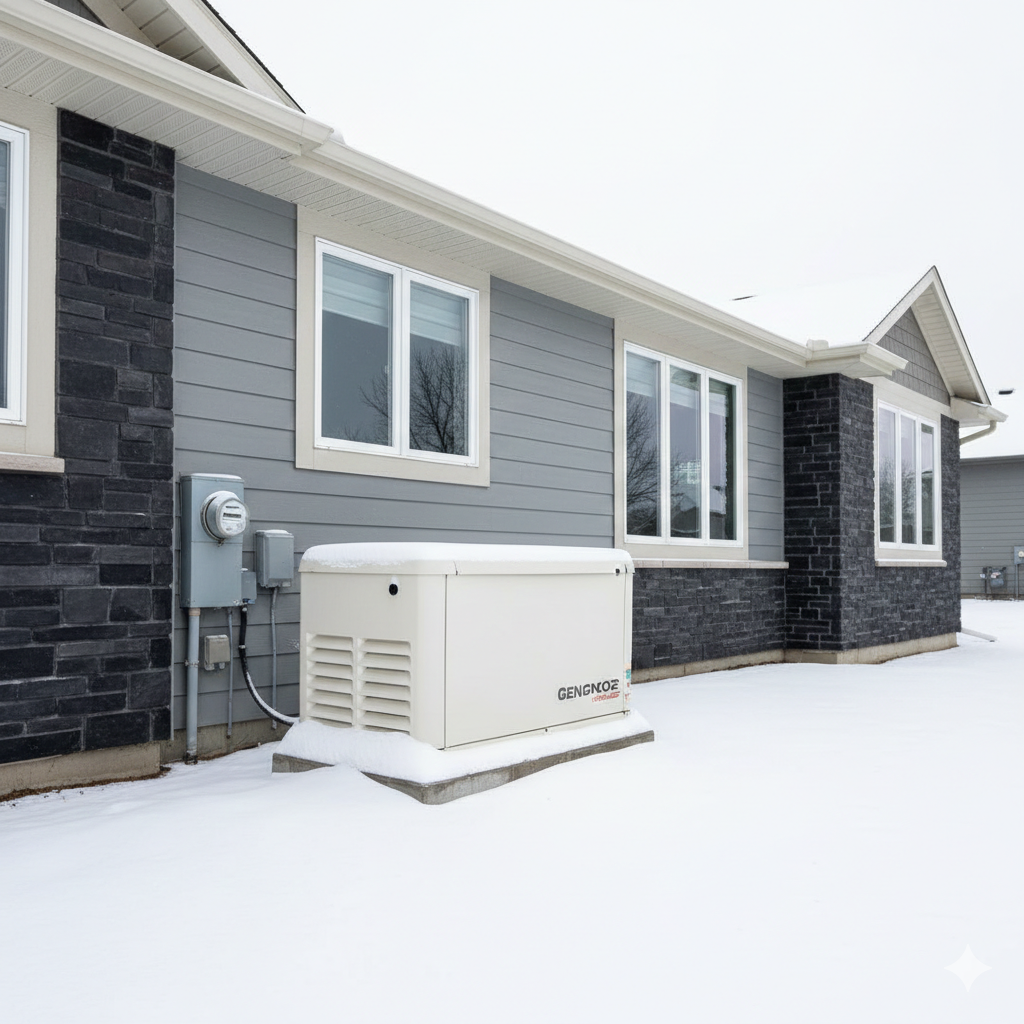
Before you look at brands or pricing, the most important decision is what you actually want the generator to run during an outage. Some Milwaukee homeowners want full coverage so the entire home functions normally, including heat, lights, kitchen appliances, laundry, and home offices. Others only need the essentials, like the heating system, refrigerator, a few outlets, and basic lighting. This choice impacts generator size, installation design, and total cost. Capital can help clarify your priorities upfront prevents overbuying, underbuying, and frustration when the power goes out.
Understand the Difference Between Whole House and Portable Options
A whole house generator is permanently installed, connected directly to your home’s electrical system, and designed to turn on automatically when the power fails. A portable generator is a manual setup that typically powers fewer items and requires safe outdoor placement, fueling, and extension cord management. In Milwaukee winters, the automatic feature is a major advantage because outages can happen overnight in freezing conditions. Whole house systems are built for reliability and convenience, while portable units are more budget friendly but require more effort and have more limitations.
Sizing Matters More Than the Brand Name
Generator sizing is not about guessing, it is about matching electrical demand to what your home needs. An undersized generator may shut down under load or force you to choose between appliances. An oversized generator costs more upfront and may operate less efficiently than necessary. A professional load calculation considers your heating equipment, refrigerator, sump pump, well pump if applicable, lighting, and any high draw appliances. Milwaukee homeowners should pay special attention to heating related power needs, since most heating systems require electricity for blowers, ignition, and controls even if they use gas for heat.
Fuel Type Choices: Natural Gas, Propane, and Diesel
Most whole house generators run on natural gas or propane, with diesel more common in certain commercial applications. Natural gas is convenient if your home already has gas service because it provides a steady fuel supply without refilling tanks. Propane can be a strong option for homes without natural gas, but it requires a properly sized tank and planning for refills, especially during extended outages. In Milwaukee winters, fuel availability and reliability matter, so it is important to choose a fuel option that matches your home and your comfort with maintenance.
Automatic Transfer Switches Are Non-Negotiable for Safety
A whole house generator requires an automatic transfer switch, which is the component that safely disconnects your home from the utility grid during an outage and routes generator power to your electrical panel. This protects utility workers and prevents dangerous backfeeding. It also ensures the generator turns on and off automatically, with a smooth transition when power is lost or restored. If you are comparing quotes, make sure the transfer switch is included and properly matched to your system.
Installation Reality, Permits, Placement, and Noise Expectations
Generator installation is a project, not a quick plug-in purchase. Milwaukee homeowners should expect the installation to include electrical work, code compliant placement, permit requirements, and coordination with the fuel supply. Placement matters because generators need safe clearance for airflow and exhaust. Noise is also a real consideration, especially if your home is close to neighbors. Modern units are designed to be quieter than many people expect, but you should still ask about decibel ratings and recommended placement to reduce sound impact. Capital can help you make the best decision and install a new system, no problem.
Maintenance Plans Are Part of the Total Cost
Buying a generator is not a one-time decision; it is an ongoing system that needs maintenance. Routine service includes oil and filter changes, battery checks, inspection of connections, and scheduled test runs to confirm reliability. Milwaukee winters can be hard on equipment, so consistent maintenance is what keeps the generator ready when a storm hits. Ask what maintenance schedule is recommended and whether monitoring options are available to alert you if the system needs attention.
Call Capital to Get a Whole House Generator Consultation
If you are considering a whole-house generator, the best first step is a professional evaluation of your home’s power needs and your winter risk factors. A properly sized, properly installed generator keeps your heating system running, protects plumbing from freezing, and keeps your home comfortable during outages. Call Capital at 262-220-7020 to schedule a whole house generator consultation and get clear recommendations before you buy.
 PLUMBING FAQS: WHAT MILWAUKEE HOMEOWNERS SHOULD KNOW TO PREVENT COSTLY PROBLEMS
