
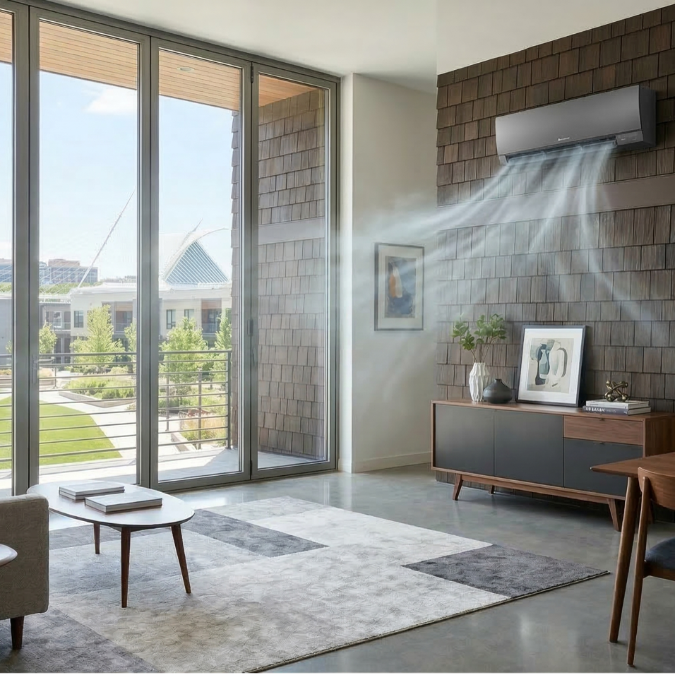
What a Ductless Mini Split System Actually Is
A ductless mini split is a heating and cooling system that does not rely on ductwork to move air through the home. Instead, it uses an outdoor unit connected to one or more indoor units mounted on walls or ceilings. Each indoor unit controls the temperature in a specific area, often called a zone. These systems are becoming more common in Milwaukee because they offer flexible comfort without the need for major renovations or duct installation.
How a Central AC System Works Differently
A central AC system uses ductwork to distribute cooled or heated air throughout the entire home. Air is pushed from a central unit through a network of ducts and vents into each room. This setup is common in many Milwaukee homes, especially those built with existing duct systems. While central systems are effective for whole home comfort, they rely heavily on the condition and efficiency of the ductwork.
The Biggest Difference, Zoned Comfort vs Whole Home Control
One of the main differences between ductless mini splits and central systems is how they control temperature. Mini splits allow for zoned comfort, meaning each room or area can have its own temperature setting. This is helpful when different spaces have different needs. A central AC system typically uses one thermostat to control the entire home, which can lead to uneven temperatures between rooms. Zoned control gives more flexibility and can improve comfort in homes with varying layouts.
Energy Efficiency and Monthly Cost Differences
Ductless mini splits are often more energy efficient because they deliver air directly into each space without losing energy through ductwork. In many homes, ducts can leak or lose cooled air before it reaches certain rooms. Mini splits avoid that issue entirely. Central AC systems can still be efficient, especially when well maintained, but they may use more energy overall if ductwork is not properly sealed or insulated. In Milwaukee, where both heating and cooling demands vary throughout the year, efficiency can have a noticeable impact on utility bills.
Installation and Home Layout Considerations
Installing a ductless mini split is typically less invasive than installing or modifying a central system. Mini splits only require a small connection between the indoor and outdoor units, which makes them ideal for older homes, additions, garages, or spaces without existing ducts. Central systems, on the other hand, require ductwork throughout the home. If ducts are already in place, central AC may be the simpler option. If not, installing ductwork can be a larger and more expensive project.
Maintenance and Long Term Care
Both systems require regular maintenance to perform well. Mini splits need their filters cleaned more frequently since each indoor unit operates independently. Central systems require duct inspections, filter changes, and routine system checks. Proper maintenance for either system helps maintain efficiency, air quality, and system lifespan. In Milwaukee, seasonal maintenance is especially important due to temperature extremes.
Why Capital Helps You Make the Right Choice
Choosing between a ductless mini split and a central AC system is not just about equipment, it is about how your home functions day to day. Capital helps evaluate layout, usage, and efficiency needs to recommend the best solution. Their experience working with Milwaukee homes allows them to identify what will perform best in real conditions, not just on paper.
If you are considering a ductless mini split or upgrading your current AC system, getting expert guidance is the best first step. Capital can help you compare options and find the right fit for your home. Call 262-220-7020 today to schedule your service and get a system that matches your comfort and efficiency goals.
 SPRING AC MAINTENANCE IN MILWAUKEE: WHY EARLY TUNE UPS PREVENT SUMMER BREAKDOWNS
